
2024.11.12


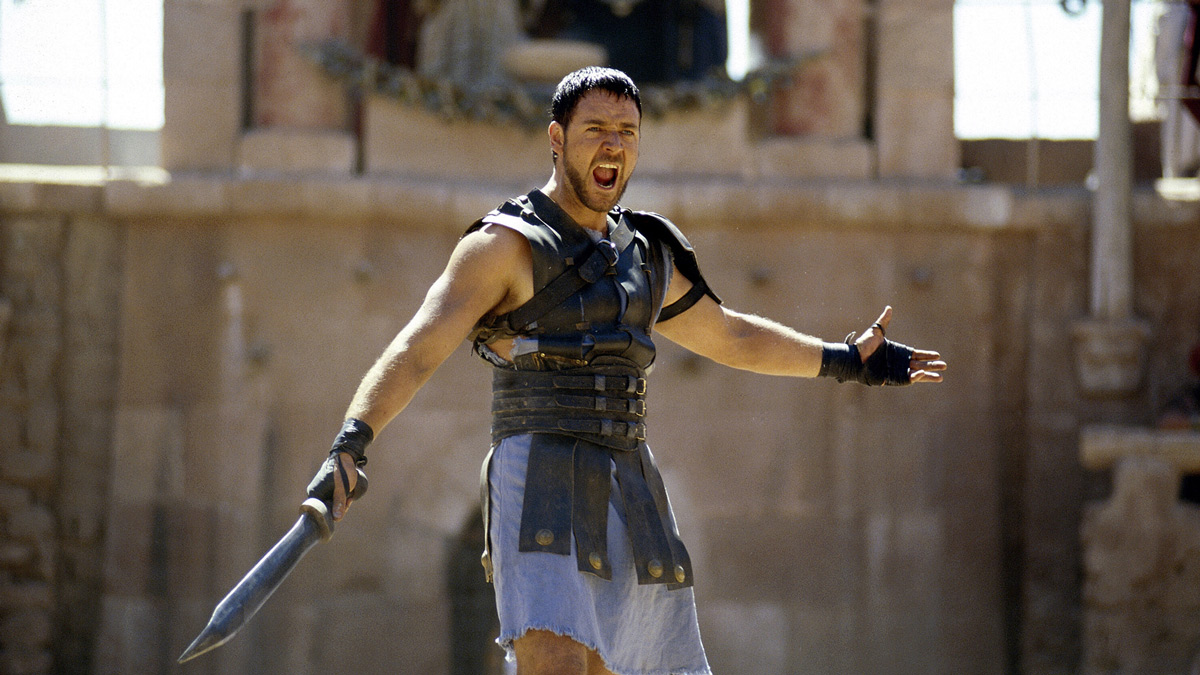
The gladiator film "Gladiator" (2000), set in the ancient Roman Empire, is the culmination of director Ridley Scott's career, and is a work that is faithful to the themes he pursues, such as good and evil, life and death, war and peace, blood and cruelty, honor and shame. And the style to directly tell the story, along with his innate visual sense, has been established in this film. How did this story of a noble hero created by such a creator?
Index
- Ridley Scott: A once in a lifetime opportunity
- Russell Crowe created Maximus
- Open the cauldron of Inferno!
- The rise of digital photography
- Hans Zimmer's exploration of the relationship between sight and sound
Ridley Scott: A once in a lifetime opportunity
After writing the screenplay for Steven Spielberg's human drama Amistad (1997), about the emancipation of slaves, and signing a three-film contract with the production company Hidden Figures, David Franzoni approached studio executives Laurie MacDonald and Walter F. Parkes with his next project: a story of gladiators fighting to the death in a Colosseum surrounded by a crowd. The two were eager to support this epic tale that made use of all the means available to Hollywood at the time.
Franzoni used Daniel P. Mannix's sensational history of Roman athletics, "Those About to Die," as a basis for his thorough research, beginning with Augustus, the first emperor of the Julio-Claudian dynasty of Rome, and discovered that Commodus, the son of the 16th emperor, Marcus Aurelius, called himself "the incarnation of Hercules" and was the only emperor to have participated in gladiatorial contests. He was also fascinated by the episode in which Commodus was strangled to death by a man named Narcissus, and these became the basis for "Gladiator."
Through various drafts, this Narcissus evolves into Maximus, a Roman general who is betrayed by Commodus and forced to flee his country, have his wife and child killed, and become a disappointed gladiator. With a desire for revenge, Maximus goes to the Colosseum to reveal his true identity, inciting himself to revolt against the ruthless Commodus in the process.
Meanwhile, director Ridley Scott, who was shooting " The White Storm " (1996) on a huge stage in Kalkara, Malta, was strolling around Fort Ricasoli, an abandoned barracks on a headland near the studio. The ruins had been the location of a British garrison during the Napoleonic Wars in 1803, and what impressed Scott there was the fantastical scenery of the wind rubbing sand against the soft limestone walls. To his eyes, this place seemed like the perfect setting for a Roman epic poem.
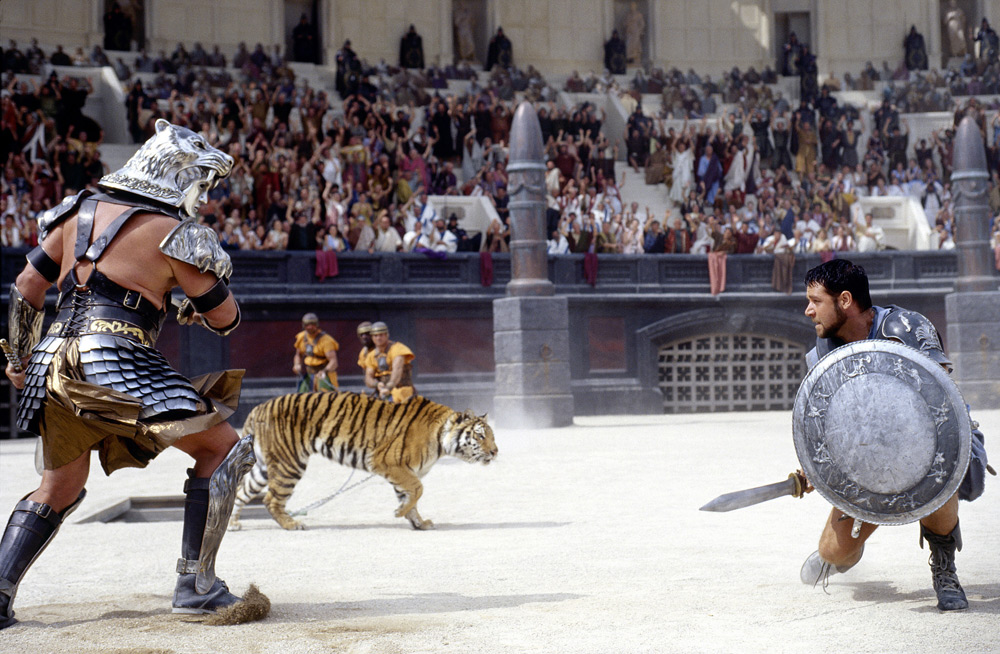
Gladiator (c)Photofest/Getty Images
Coincidentally, shortly after, Scott was invited by Parks and MacDonald to a planning meeting for Gladiator, where Parks gave him a reproduction of the French neoclassical painter Jean-Léon Léon: The Professional's The Downcast Thumb (1872), which depicts a gold-helmeted gladiator stamping on the throat of a defeated opponent while Vestal Virgins and spectators lower their thumbs to signal for the defeat of the villain's execution.
"The moment Walter showed me the painting, I was hooked," says Scott, and with this inspiring image as his oar, he began to row his creative ship towards a new development in Gladiator.
The Gladiator project was a once-in-a-lifetime opportunity for Scott. However, heroic historical dramas such as Quo Vadis (1951) and Spartacus (1960) were already considered an obsolete genre in Hollywood, and his own filmography had been riddled with box office failures with three consecutive films: Columbus (1992), The White Storm , and G.I. Jane (1997), so he was in a difficult position as a commercial director. However, Scott said:
"Risks are a part of my life. I love them. And more than anything, I really love creating worlds."
Follow official SNS


