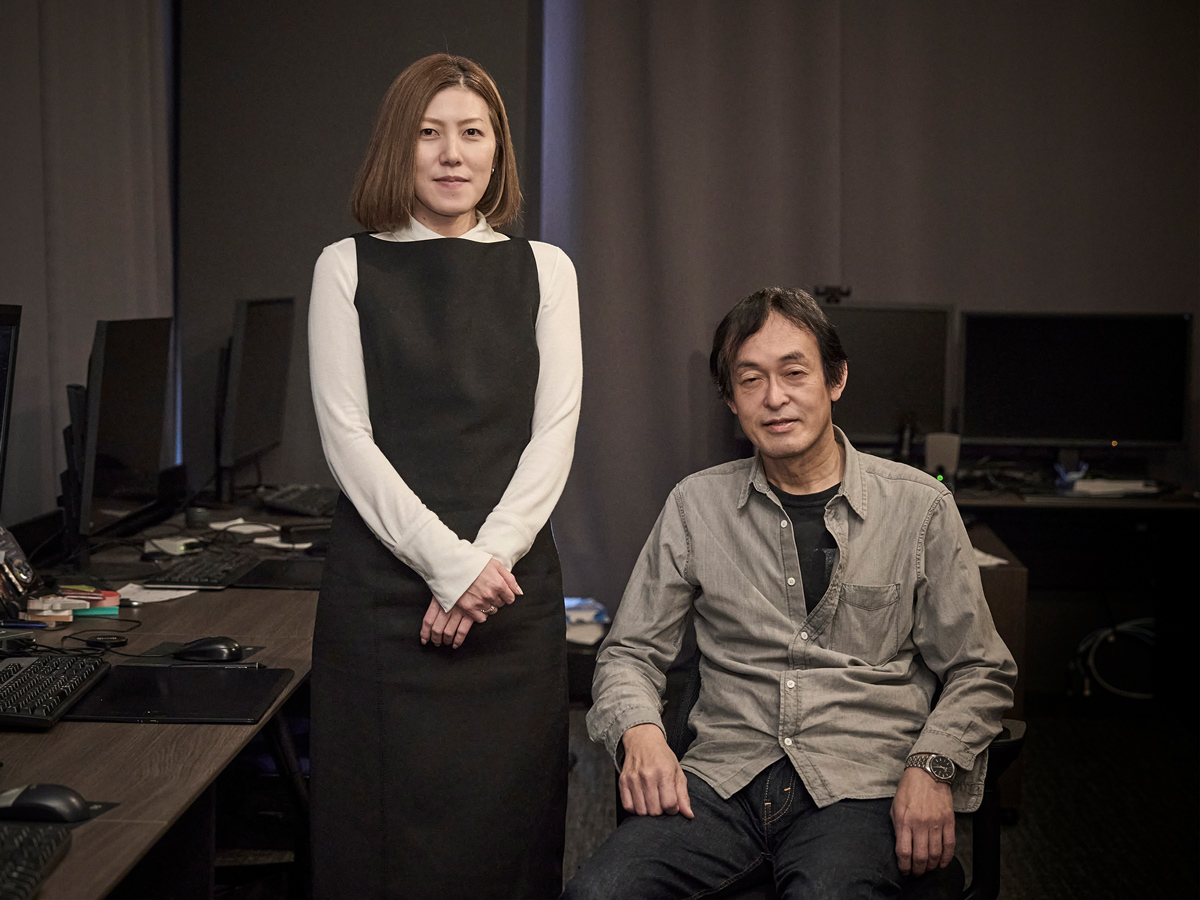
*From the left: Yoko Arai and Yoshiaki Abe, IMAGICA Entertainment Media Services
"Ichikawa Raizo Film Festival: A Momentary Sparkle" Restoration by Yoko Arai x Grading by Yoshiaki Abe - How was a film from over 50 years ago brought back to life? [CINEMORE ACADEMY Vol.36]


How much should be erased?
Q: There seem to be a lot of scratches on the film. How exactly do you remove them?
Arai: Nowadays, there is software for film restoration, which has functions to correct film shake, correct brightness flicker, detect and correct dust and scratches, and so on, and these can be used automatically. However, the automatic function often fails, stopping the shake that is being performed, or recognizing something that is not dust as dust. While using the automatic function, we also check visually at the same time.
Q: Is the extent of the correction, such as how much to erase and how much to leave, decided at the beginning?
Arai: Yes. We often discuss and decide on things together with the team working on the project and the people at the film company.
Abe: Basically, I think it's better to have absolutely no scratches. If there are no scratches, there's no stress from flickering on the screen, and you can get into the story. Old films have the image of having vertical scratches, but those weren't there when they were first screened. I think that the original state should be the goal of remastering.
Arai: I want people to watch remastered versions without feeling like they're old. When considering quality from that perspective, the current trend is to eliminate all scratches.
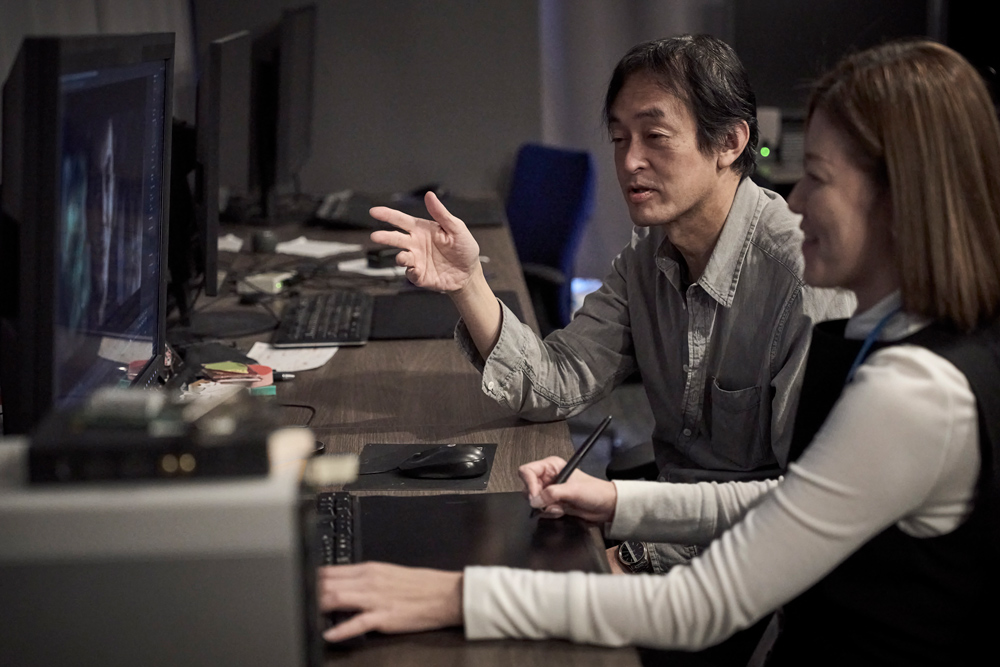
*From the left: Yoshiaki Abe and Yoko Arai, IMAGICA Entertainment Media Services
Abe: We sometimes receive requests from directors and cameramen to remove any so-called "revealings" that were accidentally captured during filming. On the other hand, the National Film Archive of Japan and others have the philosophy of wanting to preserve the film in its original form, so they will not remove any obvious evidence. There is no right or wrong, but I think it is just a difference in the way we think about the "newness" of remastering.
Q: This is a very minor point, but will the change mark that signals when the film needs to be changed be left in?
Abe: Depending on the editor, they may leave change marks.
Arai: There have been times in the past when we have actually left something behind.
Adjusting the grain between negative and positive
Follow official SNS