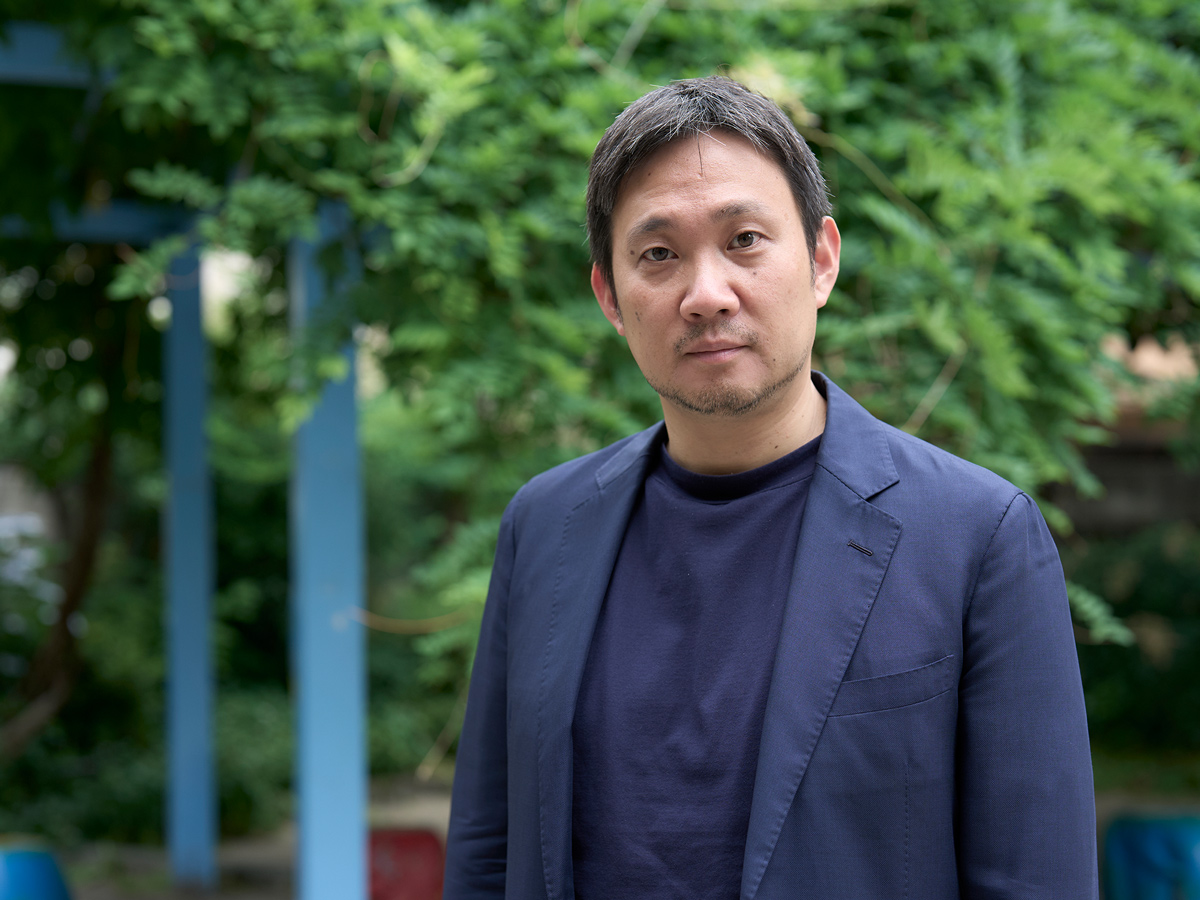
"All of a Sudden": Director Ryusuke Hamaguchi's Approach to the Power of the Original Work That Driven the Film [Director's Interview Vol. 565]


" All of a Sudden " is a book consisting of 20 correspondences between a philosopher who has survived cancer metastasis and an anthropologist who has conducted extensive research in clinical settings. How will this original work be adapted into a film?
At first glance, the finished film may seem to bear little resemblance to the original novel. However, if you read the book and then watch the film, you will be deeply surprised to realize that the book undoubtedly breathes life into the very foundation of this work. Director Ryusuke Hamaguchi carefully extracts the meaning behind each word written in the original and weaves it together into a solid story. This is precisely the impression that this film leaves.
We spoke with director Hamaguchi to find out how he adapted "All of a Sudden" into a film.
"All of a Sudden" Synopsis
The story is set in Paris, France. Marie-Lou Fontaine (Virginie Efira), the director of the suburban nursing home "The Garden of Freedom," aspires to provide humane care for her residents, but is troubled by staff shortages and a lack of understanding from her colleagues. Amidst this, Marie-Lou meets a Japanese director named Mari Morisaki. Mari, who is battling cancer, directs a one-woman show starring actor Goro Kiyomiya, who spends his days with his grandson Tomoki, who has autism spectrum disorder. Marie-Lou finds courage in the theater that Mari is creating. Led by the coincidence of sharing the same name, the two begin to interact. However, one day Mari "All of a Sudden." As Mari's illness progresses, their relationship deepens dramatically, and they begin to connect on a deeper level...
Index
- Things I took from the original work
- The power of the original work drove the film.
- Humanitude and Basaglia
- The reasons and persuasiveness of mutual attraction
- Whether or not you can impress them with your first rush
Things I took from the original work
Q: When producer Hiroko Matsuda gave you the original book, you were strongly drawn to it, even though you thought it would be difficult to turn it into a movie as is. Did you also have a desire to turn it into a movie?
Hamaguchi: That was the really difficult part. I felt emotions that I couldn't put into words, and I felt that those very emotions were at the heart of the original work. It's rare for me to be approached with a project that moves me so deeply. So, I naturally thought, "I don't know what to do, but I want to do it."
Q: The original work is reflected in the core soul of the film, but not in a clearly recognizable way, such as in the details. I understand that you reread the original work many times when writing the script, but were there any specific parts that you referenced?
Hamaguchi: The original work is a series of correspondence, so naturally there is only text and almost no visual elements. It basically consists of abstract and academic conversations between two scholars, but the nature of the words they choose gradually changes. It becomes more personal. I think what fascinated me was the "dynamics of the relationship and its shifts as each word is chosen."
The letters were published while they were being written, so they were written in a way that made them accessible to third parties. However, fundamentally, the two of them were constantly and diligently thinking about and choosing "what words to convey to the other person." It wasn't simply expressing one's own thoughts; they were both thinking about "what kind of words would reach this person." Their relationship changed depending on those words, and there was a tension and a certain consideration between them as they considered "how to respond to these words"—or perhaps it was more like "the responsibility of choosing words." I hoped that these things could be translated into film.
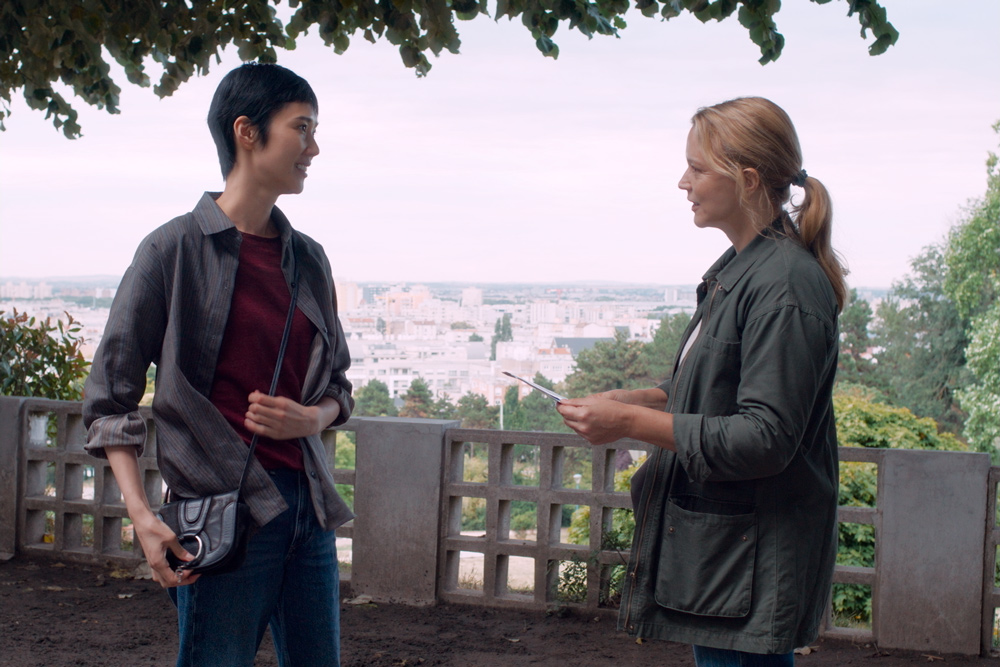
"All of a Sudden" © 2026 Cinéfrance Studios – Arte France Cinéma – Office Shirous – Bitters End – Heimatfilm – Tarantula - Gapbusters – Same Player – Soudain JPN Partners
Q: The original work includes a chapter that mentions "chance." You also directed a film called " Chance and Imagination " (2021). Were you interested in the content of the conversation between Miyano and Isono?
Hamaguchi: That's right. When I was making " Chance and Imagination, " I needed to think about "what is chance?" so I read a book called " The Problem of Contingency " written by the philosopher Kuki Shuzo. However, it was an extremely difficult book, beyond just being written in old language, and I didn't really understand it after reading it just once. In that situation, Mr. Miyano is a specialist in Kuki Shuzo, and in his book "All of a Sudden," he spoke about "chance" in simple language that anyone could understand. That became my starting point for understanding Kuki's philosophy. I also read " The Interstices of Encounters ," which was published after Mr. Miyano's death, and " The Problem of Contingency " was the main topic there as well, and I finally had a moment of realization, thinking, "Ah, so that's what it means." In that respect, I feel a sense of connection and gratitude.
The power of the original work drove the film.
Follow official SNS